Last updated: October 27, 2026
Quick Answer: In HVAC buying and sizing basics — The Complete Guide, the right system is usually the one sized by a load calculation, not square footage alone. In many homes, the difference between a right-sized unit and an oversized one can be as little as 0.5 ton, yet that small gap can change comfort, humidity, and runtime a lot.
If the system is too small, it will run too long and never quite catch up. If it is too large, it will short-cycle, waste energy, and leave the air clammy. The right HVAC buy is the one that matches the load of the space, the ducts, and the climate — not the biggest unit in the quote.
I write about heating and cooling choices with a strong bias toward practical selection: what to buy, what to size, and what to ask before anyone installs a compressor on your property. That matters because HVAC is rarely a simple equipment purchase; it is a comfort, cost, and installation problem wrapped together. In HVAC buying and sizing basics — The Complete Guide, the first question is always how the system will perform over time, not how impressive it looks on day one.
Key takeaways
- Size is not a guess. A proper load calculation matters more than square footage alone.
- Bigger is usually worse for comfort when the system is cooling a normal home or light-commercial space.
- Duct condition, insulation, windows, ceiling height, and sun exposure can change the needed capacity enough to make a “standard” recommendation wrong.
- The cheapest quote often leaves out work that helps prevent short cycling, uneven temperatures, and high bills.
- A good contractor should explain the load calculation, duct assumptions, equipment efficiency, and permit plan in plain language.
- If you are replacing an existing system, the old unit’s size may be wrong already.
What HVAC buying actually means
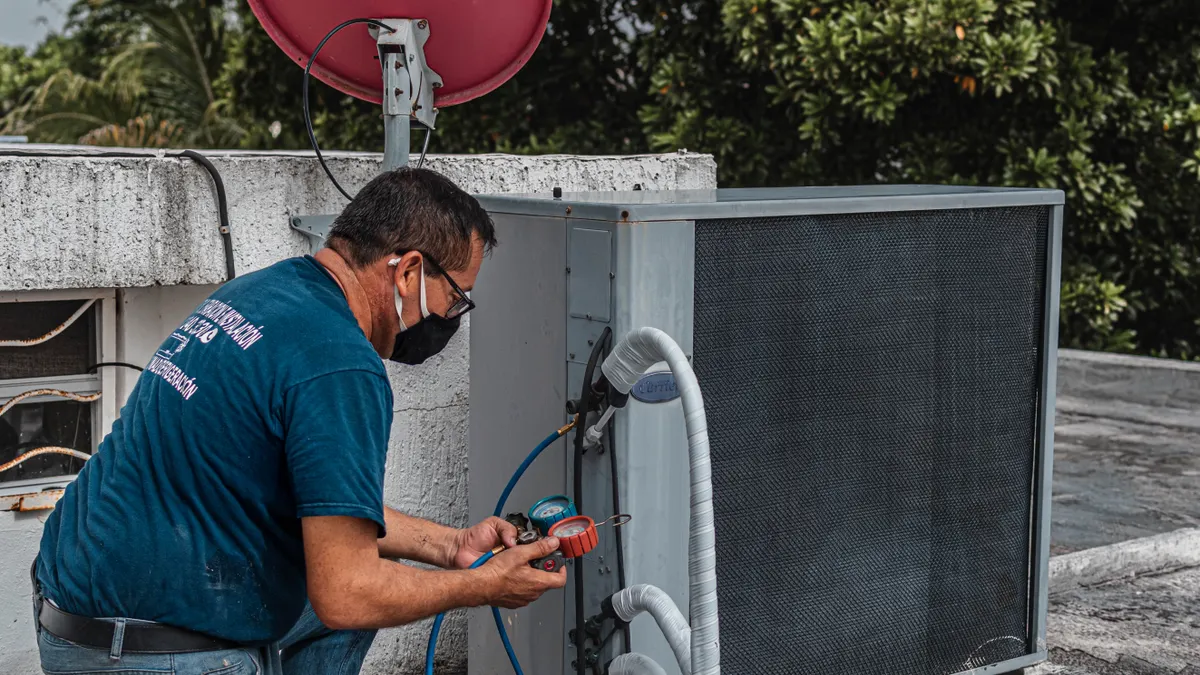
HVAC buying is really three decisions at once: how much capacity you need, what kind of system fits the space, and who should install it. For most buyers, the first mistake is treating it like a brand comparison, but a licensed HVAC professional should help verify the sizing and options before you choose. A 3-ton heat pump, a 4-ton split system, and a dual-fuel setup can all be wrong for the same building if the load estimate is off.
The most useful starting point is the Manual J load calculation, the standard residential method used to estimate heating and cooling needs based on the building’s actual characteristics. The Air Conditioning Contractors of America describes Manual J as the industry reference for residential load calculations; that is the level of detail a serious quote should eventually reach. The U.S. Department of Energy also recommends sizing equipment based on the home’s load rather than rule-of-thumb estimates. A square-foot shortcut can point you roughly in the right direction, but it is not the same thing as a load calculation.
A good buying decision also depends on where you live. A home in Phoenix faces a very different cooling load than one in Minneapolis. Humidity changes the picture too, because latent load matters as much as temperature in muggy climates. If you are in a hot-humid region, oversizing can leave the thermostat satisfied before the system has run long enough to pull moisture out of the air.
The buyer who does best here is the person who wants one clean install and fewer surprises after the first utility bill. The buyer who should slow down is the one getting a rush quote based only on square footage and a cursory look at the old equipment nameplate. According to ENERGY STAR, better sizing and installation choices can affect both comfort and efficiency.
How do I know what size HVAC system I need?
You know the right size only after the load is calculated. Square footage is a starting point, not the answer.
A common mistake is to size by the old unit or by a rule of thumb such as “one ton per 500 square feet.” That may land close in some simple homes, but it can be badly wrong in a house with poor attic insulation, large west-facing glass, a vaulted ceiling, or leaky ducts. The right answer depends on heat gain and heat loss, not on a single number. In HVAC buying and sizing basics — The Complete Guide, that is the most important sizing point to remember.
Here is what changes the required size most often:
- Climate zone and design temperatures
- Insulation in walls, attic, and crawlspace
- Window count, orientation, and glazing type
- Air leakage and duct leakage
- Ceiling height
- Number of occupants and internal heat from appliances and electronics
- Whether the system also has to handle humidity well
A contractor should be willing to explain the assumptions behind the capacity recommendation in plain terms. If they cannot say why 2.5 tons beats 3 tons for your space, that is a warning sign. The number may still be right, but the process is weak.
A system that is slightly undersized can still be acceptable in mild weather if it is paired with good insulation and a realistic comfort expectation. A system that is oversized is harder to forgive because it tends to cool too fast, cycle on and off, and fail at moisture control. In practical terms, the wrong size often feels like uneven rooms, a thermostat that never seems to settle, or bills that do not match the comfort delivered.
The difference between right-sized and oversized equipment
Right-sized equipment wins for comfort and runtime; oversized equipment wins only in a sales quote. That is the blunt answer.
The head-to-head below shows how the two choices behave in the real world.
| Criteria | Right-sized system | Oversized system | Winner for this condition |
|---|---|---|---|
| Comfort steadiness | Runs long enough to even out room temperatures | Cools quickly, then shuts off before the house stabilizes | Right-sized, for occupied living spaces |
| Humidity control | Better dehumidification because cycles are longer | Often leaves air cool but sticky in humid weather | Right-sized, in humid climates |
| Energy use pattern | Fewer hard starts and more efficient runtime | More start-stop cycling and often higher operating cost | Right-sized, for most homes |
| Noise | Usually quieter over the day | Noticeable bursts of fan and compressor noise | Right-sized, for bedrooms and open plans |
| Equipment wear | Fewer short cycles reduce stress on parts | More starts can mean more wear on contactors, motors, and compressors | Right-sized, for longevity |
| First-cost temptation | Sometimes a little more planning, not necessarily higher equipment size | Looks appealing if a salesperson pushes “headroom” | Right-sized, when comfort matters more than the sticker shock |
| Cold-weather backup | May need help in extreme weather if the home is poorly insulated | Can cover short peaks, but not a fix for bad envelope performance | Oversized only in a very leaky or underspecified building |
| Duct sensitivity | More forgiving of duct design that is actually matched to the load | Can expose duct imbalance faster because the air rush is higher | Right-sized, with existing ductwork |
| Moisture issues | Better chance of long enough runtimes to wring out water vapor | Higher risk of clammy indoor air | Right-sized, especially in coastal and Gulf climates |
The reason oversized equipment loses so often is simple: HVAC is not only about peak capacity. It is about how the system behaves for the other 95% of the day. A cooling system that blasts a space from warm to cold in a few minutes may seem powerful, but that is exactly what makes it poor at dehumidification and temperature stability. The U.S. Department of Energy notes that proper sizing helps avoid short cycling and can improve comfort.
The one time oversizing can look attractive is in a badly insulated building with obvious envelope problems that will not be fixed right away. Even then, the better fix is often insulation, air sealing, or duct repair rather than jumping a full size. A bigger compressor is a patch, not a cure. A licensed contractor should help you compare the temporary gain against the long-term cost.
Right-sized HVAC: who should choose it and who should not
Right-sized HVAC is the default choice for most buyers because it matches the load calculation, not the salesman’s comfort margin. It is the best fit for homeowners replacing an old system, buyers in humid regions, and anyone who notices uneven temperatures between rooms. In HVAC buying and sizing basics — The Complete Guide, that makes it the baseline recommendation, not the exception.
The biggest strength of right-sized equipment is control. A properly selected system can run long enough to remove humidity, keep temperatures steady, and avoid the on-off swing that many people mistake for “strong cooling.” That matters in real life because comfort is not just peak cold air; it is whether a bedroom stays tolerable all night and whether the living room feels damp after a rainstorm. For heating, right sizing also helps avoid the blast-and-idle pattern that can leave rooms too hot near the supply register and too cool elsewhere.
There are honest weaknesses. Right-sized equipment offers less forgiveness if the home is leaking air badly or if the ducts are undersized and dirty. A building with poor insulation may still feel uncomfortable unless the envelope is improved. It also gives you less “extra” capacity for future additions, such as a finished attic or a sunroom. If a contractor says, “Let’s size up just in case,” the right response is usually to ask what case is being assumed and whether the load calculation already included the real design conditions.
This option is not for the buyer who wants a quick fix for a badly performing building with no plan to address the building itself. It is also not ideal if you are buying for a temporary property where comfort precision does not matter much. For everyone else, it is the safer, more defensible choice because it solves the actual problem instead of inflating the equipment.
Bigger systems and higher-capacity models: when they make sense
Higher-capacity systems win only when the building genuinely needs the extra load handling. That usually means a specific problem, not a vague desire for “more power.”
The strongest case for a larger system is a space with a documented high load: major glazing, severe climate exposure, large internal heat gain, or a use pattern that fills the building with people and equipment. A small commercial office with printers, computers, and a high occupant load can justify a different sizing logic than a standard home. A poorly insulated older building may also need larger capacity until envelope work is done. In those situations, the system is not oversized in the casual sense; it is responding to a real load.
The weakness is that many buyers confuse “larger” with “better.” A larger compressor does not automatically improve comfort. If the ducts are too small, the air handler may not move air efficiently. If the refrigerant charge or airflow is wrong, the system can still perform badly. If the load calculation says a 3-ton unit is enough and someone installs 4 tons “for safety,” the added capacity can create more problems than it solves.
A larger system also tends to cost more to install and can require electrical, gas, or venting changes. That means the purchase decision is not just the equipment itself; it is the total project scope. If a contractor recommends a larger unit, the right question is not “Why not bigger?” It is “Which load item proves the bigger size is required?” That answer should mention specific windows, insulation values, infiltration, duct losses, or occupancy loads, not just a feeling.
This choice is for the buyer with a real load problem and a contractor willing to show the math. It is not for anyone using size as a substitute for home repairs. The U.S. Environmental Protection Agency also advises matching HVAC choices to the building and climate, not to assumptions.
What makes one HVAC quote better than another
A better HVAC quote is the one that explains assumptions, not the one with the flashiest brand name. Price alone is a poor comparison unless the quotes describe the same equipment, the same duct work, and the same installation scope.
Look for these items in writing:
- Load calculation method, ideally with the assumptions listed
- Equipment model numbers and efficiency ratings
- Duct modifications, sealing, or balancing work
- Thermostat type and whether it is included
- Electrical or gas line changes
- Permits and inspection responsibility
- Condensate drain work
- Start-up and commissioning steps
- Warranty terms on parts and labor
If one quote is much lower, the missing pieces often show up later as change orders or performance problems. A low bid may skip duct sealing, use minimal return air, or replace the outdoor unit without fixing the indoor coil or airflow mismatch. That can be legal and still be a bad buy.
The better contractor is the one who can explain why the existing system failed. Was it undersized? Was the duct system leaky? Was the air handler mismatched? Was the problem really insulation or air leakage? That diagnosis matters because swapping equipment without fixing the cause can repeat the same discomfort with a newer nameplate. For a deeper look at what to ask, see the HVAC contractor checklist and home energy audit guide.
There is also a timing issue. If a replacement is urgent during peak season, you may have fewer model choices and less time for detailed comparisons. In that case, you still need the basics: the load estimate, the equipment match, and a clear installation scope. Speed is not an excuse for skipping sizing.
How much should HVAC installation cost, and what changes the price?
HVAC installation cost varies enough that a single price is not useful without the job details. The real drivers are system type, capacity, duct condition, labor complexity, and whether the installation requires electrical, gas, venting, or structural work.
A straightforward replacement in an accessible attic or basement is usually simpler than a project that needs new ducts, a new return, a panel upgrade, or refrigerant line changes. Heat pumps can be less straightforward than simple change-outs when cold-weather performance, defrost strategy, or backup heat must be considered. High-efficiency equipment may cost more up front because it can require more elaborate venting, drains, or control wiring.
What a buyer should ask about price:
- Is this a replace-in-place job or a full system redesign?
- Are ducts being reused, repaired, or replaced?
- Does the quote include code compliance work?
- Are permits and inspection fees included?
- Is the thermostat included?
- Are there any likely add-ons once the old system is removed?
A quote that looks cheap can become expensive if it leaves out duct repairs or necessary electrical work. A quote that looks high can be fair if it includes the parts of the job that make the system actually work well. The cleanest way to compare price is to compare scope line by line.
If someone will not break down the job, that is a reason to pause. HVAC pricing is not just a number; it is a description of what the contractor plans to do in your building. For price context, it can also help to review ENERGY STAR guidance on efficiency and the HVAC maintenance basics page before signing.
How long does HVAC replacement or installation take?
Most straightforward HVAC replacements take less than a full week of on-site work, and many are completed in a single day or two, but the real timeline depends on whether the job is a simple swap or a full system correction.
A swap-out in an accessible location is faster because the contractor is mostly removing old equipment, setting the new unit, connecting refrigerant lines, and verifying operation. The timeline gets longer when the job includes duct repair, new line sets, panel work, permit inspections, or custom fabrication. If the attic is tight, the crawlspace is cramped, or the outdoor unit sits on a bad pad, the labor time rises too.
The buyer should also account for lead time before the crew arrives. A good contractor may need to schedule a load calculation, order equipment, and pull permits. In busy seasons, that prep time can matter more than the install day itself.
A rushed installation is a risk even when the equipment is correct. Common rushed-job failures include poor airflow, missing insulation on refrigerant lines, sloppy condensate drainage, and incomplete start-up checks. None of these are exotic problems, and all of them can make a brand-new system perform badly.
If time matters because the old unit failed during a heat wave, ask one direct question: what is the minimum work needed to restore safe, code-compliant operation, and what can wait for a later visit? That separates emergency repair from a true replacement plan.
What a bad HVAC job looks like after the crew leaves
A bad HVAC job usually shows up in the first month, not the first hour. The signs are often subtle enough that a homeowner blames the weather instead of the install.
Common warning signs include:
- Rooms that stay uneven by several degrees
- Short cycling, where the system turns on and off too often
- Sticky indoor air despite “cold” supply air
- Supply vents that feel weak or noisy
- Condensate leaks or water around the air handler
- Odors from poor drainage or dirty installation debris
- Thermostat readings that do not match the room
- Breakers tripping or repeated service calls
These symptoms often point to airflow, duct, refrigerant, or drainage problems rather than a bad brand. A properly selected system can still fail if the installation is sloppy. That is why the installer matters as much as the equipment label.
One of the clearest bad-job clues is when the contractor blames every complaint on “normal operation” without checking the basics. Another is when no one can show the start-up readings or explain the air balance. A system should be commissioned, not merely turned on. The Air Conditioning Contractors of America and the Department of Energy both emphasize proper setup and verification.
This is where the buyer should be plain-spoken. Ask for the model number, ask what was measured at start-up, and ask how the system was matched to the load. If the answers are vague, the next breakdown may already be brewing.
Exception scenarios that change the recommendation
The right-size-first rule flips in a few specific cases. Those exceptions are worth naming because they are the situations where a generic guide can mislead you.
-
You are planning a major envelope upgrade within months. If insulation, air sealing, or window replacement is already scheduled, the final load may drop enough that today’s replacement should not be sized to today’s wasteful conditions. In that case, the contractor should talk through a staged plan, not just sell the biggest comfortable fit now.
-
The building has a known occupancy or use change. A finished basement, converted attic, home office conversion, or added kitchen can materially change the load. A system that was right for the old layout may now be undersized, and the sizing conversation has to include the new use, not the old floor plan.
-
The space is in an extreme climate with a documented peak load. In very hot or very cold locations, the equipment may need to cover a harsher design condition than a milder climate would require. That does not justify sloppy oversizing, but it can change the capacity target.
-
The duct system is the true bottleneck. Because the ducts are often the real limitation, sometimes the best answer is not a different compressor at all. If ducts are undersized, disconnected, or badly routed, fixing the distribution system may matter more than changing tonnage. In that situation, a bigger outdoor unit can make the real problem louder.
The verdict: which HVAC choice to make
Choose the right-sized system if you want stable comfort, better humidity control, and a replacement that matches the building load rather than the old equipment label. Choose the bigger-capacity option only if a proper load calculation shows the space genuinely needs it because of climate, occupancy, glazing, or envelope limits. Neither if the quote is based on square footage alone, skips duct condition, or refuses to explain the sizing math.
For most buyers, the safest decision is the boring one: load calculation first, equipment second, installer third. That order avoids the most expensive HVAC mistake, which is buying capacity you do not need and then paying to live with its side effects for the next 10 to 15 years.
Drafted with AI; not yet reviewed by a person.